



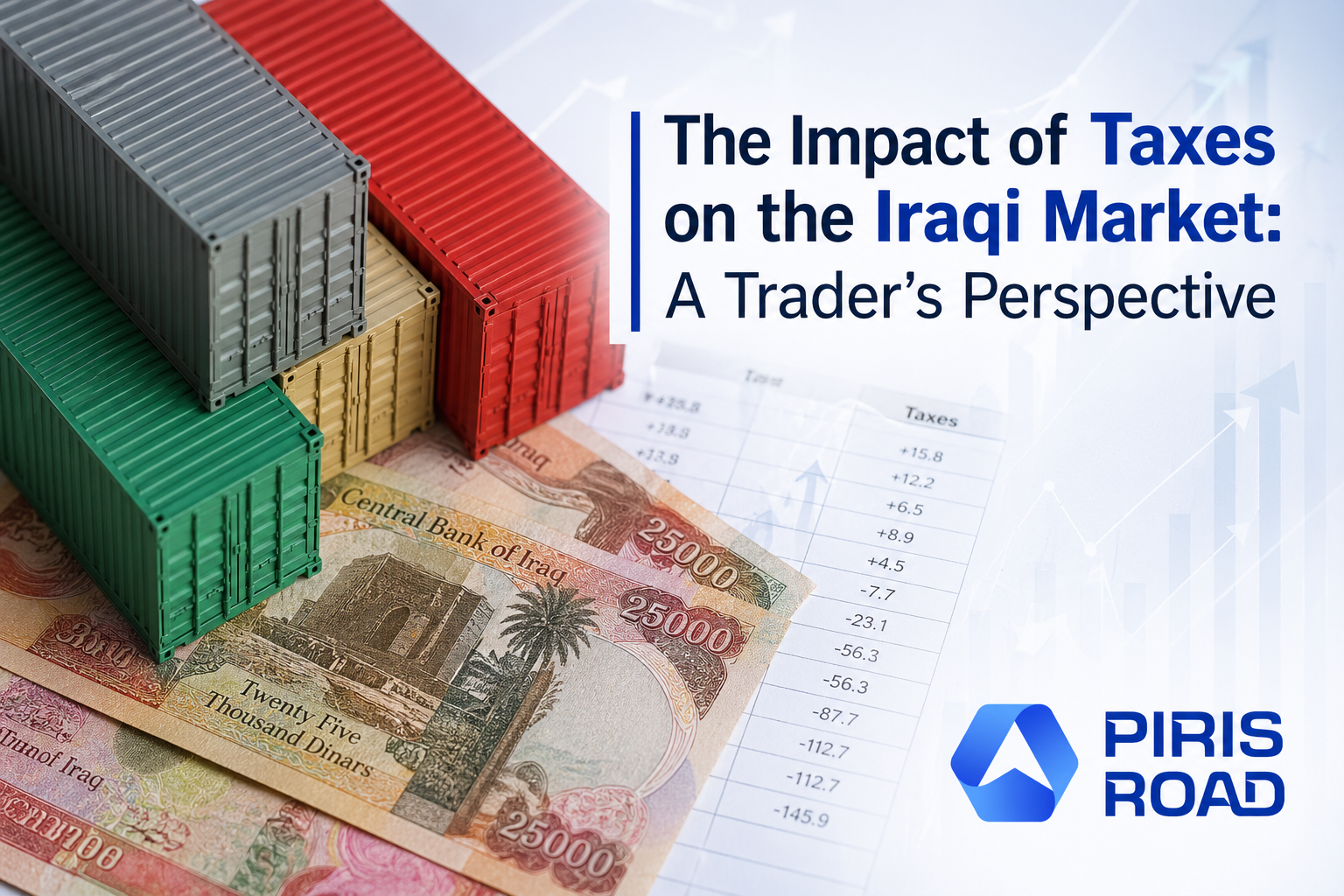
Taxes play a critical role in shaping market behavior, pricing strategies, and overall business sustainability. In the Iraqi market, recent changes in tax regulations and enforcement have had a noticeable impact on traders, importers, and business owners across various sectors.
Understanding these effects is essential for traders who aim to protect margins, remain competitive, and plan for long-term growth.
Rising Costs and Pricing Pressure
One of the most immediate effects of taxes on the Iraqi market is the increase in operational costs. Import duties, customs fees, and sales-related taxes directly affect the final cost of goods.
For traders, this creates a difficult balance:
- Absorb the additional cost and reduce profit margins
- Or pass the cost to consumers and risk lower demand
In a price-sensitive market like Iraq, even small increases can influence purchasing decisions.
Impact on Imports and Supply Chains
Taxes and customs procedures significantly affect import-based businesses, which make up a large portion of the Iraqi market. Delays, unclear tax assessments, and changing regulations can disrupt supply chains and increase uncertainty.
For traders, this means:
- Higher capital requirements
- Longer inventory turnover cycles
- Increased reliance on accurate forecasting
Efficient tax planning has become as important as logistics planning.
Market Competition and Informal Trade
High or inconsistently applied taxes can unintentionally strengthen the informal market. When compliant traders face higher costs, unregistered or untaxed competitors may offer lower prices, creating unfair competition.
This puts pressure on legitimate businesses and discourages long-term investment unless tax enforcement becomes more consistent and transparent.
Cash Flow and Business Stability
Taxes also affect cash flow management, especially for small and medium-sized traders. Paying taxes upfront while waiting for sales revenue can strain liquidity and limit expansion opportunities.
Traders who fail to plan for tax obligations may face:
- Delayed payments to suppliers
- Reduced ability to restock
- Increased financial risk
Strong financial discipline is now a necessity, not an option.
Opportunities for Organized Traders
Despite the challenges, taxes can also create advantages for organized and compliant traders. Businesses that maintain proper records, understand tax obligations, and work with professional accountants are better positioned to adapt.
Compliance builds:
- Credibility with banks and partners
- Eligibility for future incentives
- Long-term operational stability
As the Iraqi market continues to formalize, organized traders are more likely to benefit.
Conclusion
Taxes have become a defining factor in the Iraqi trading environment. While they increase costs and complexity, they also encourage better organization, transparency, and strategic planning.
For traders, success in today’s Iraqi market depends not only on buying and selling—but on understanding taxation, managing risk, and planning ahead. Those who adapt will remain competitive in a rapidly evolving economic landscape.